Supreme Court insists it has already delivered decision in Attorney-General v Taylor

The Supreme Court of New Zealand today issued a press release insisting it has already delivered a decision in Attorney-General v Taylor SC65/2017.

“You must not have received it,” said Chief Justice Dame Sian Elias.  “We’ve been having some problems with our Outlook.”

The Court heard the case, which deals with important constitutional issues of prisoner voting rights and the ability of the courts to grant declarations of inconsistency with the New Zealand Bill of Rights Act 1990, over two days in March 2018.  Since that time the decision has been eagerly awaited by the government, Parliament, academics and lawyers.

“The fact is that the Court has delivered a judgment, and definitely sent it to you all.  It’s weird that you didn’t get it but that’s ultimately not our fault,” Elias CJ continued.

When pressed on the outcome of the case, William Young J stated he “couldn’t remember” and “it’s not that important anyway, I’d just forget about it if I were you.  It might have got lost in the post or something.”

When asked whether a further copy of the judgment could be provided a Supreme Court spokesperson said that the court was having printer difficulties at the moment.

Thoughts on Solicitor-General v Heta [2018] NZHC 2453

Introduction

In Solicitor-General v Heta [2018] NZHC 2453 Whata J upheld a sentence for violent offending that incorporated total discounts for personal factors of 40%, and then applied a further 25% discount for a guilty plea.

The primary feature of the sentence and appeal was the impact of the cultural background report for Ms Heta, produced under s 27 of the Sentencing Act 2002.  The report detailed Ms Heta’s life and the very considerable personal traumas and challenges she had faced.  On appeal the questions included what discount (if any) it warranted, and whether the level of discount afforded by the District Court Judge (30%) was prohibited by Court of Appeal authority.

Justice Whata reached his decision in Heta through the application of orthodox sentencing principles.  The decision discussed the potential for discounts based on systemic Māori deprivation but, crucially, did not purport to give those discounts in this case.  Instead, Whata J laid out a path through Court of Appeal authority and gave strong guidance on what type of evidence would be necessary for discounts in future cases.  None of that was set at an unachievable level.  Viewed in this light, Heta may not be the breakthrough case about cultural background reports (at least on a strict application of stare decisis).  But it will be the roadmap for the next round of sentencing decisions that use s 27 of the Sentencing Act 2002, one of which will inevitably be taken on appeal to the Court of Appeal.

Finally, an early disclaimer that I cannot and do not write with a kaupapa Māori approach to this topic.  I can only show my respect by disclaiming any authority in that regard.  When I see more commentary on this case from persons more qualified than me, I will link them at the bottom of this post.

Cultural background reports – an exercise in obiter

Justice Whata upheld Ms Heta’s end sentence as not manifestly inadequate.  That end sentence of three years and two months’ imprisonment included a 40% reduction for personal factors and a further 25% discount for guilty pleas.  The District Court Judge had given a 30% discount “to take into account the background and cultural information in [the cultural background report]” (Heta at [11] quoting the District Court decision).

In the final paragraphs when looking at the correctness or otherwise of the discounts in this case, his Honour did not in fact endorse the structure or reasons for the discount in the District Court (at [64]-[67]).

Instead, his Honour fell back to the time-honoured refuge of appellate jurisprudence of “well, even if the reasoning was wrong, you could have got to that result and here’s how”.  Justice Whata held that what would have been justified on the facts of this case was:

  • A discount for personal trauma of 5-10%.
  • A combined discount for positive engagement in restorative justice and remorse of 20%.
  • A discount for capacity for rehabilitation of 5-10%.

His Honour cited authority for all of those discounts (see footnotes 47-49).

This is crucial for understanding the decision in Heta.  Ms Heta did not get discounts simply by having a cultural background report.  Instead, in Ms Heta’s case, and on Whata J’s judgment the discounts were for entirely orthodox reasons.  They are factors justifying discounts that are applied every day.  It just so happened that in this case the reasons for those discounts were to be found in the cultural background report.  Or, as Whata J put it, “[t]he report identifies several key facts that directly bear on both culpability and rehabilitation” (at [64]).

On that view, the lengthy discussion of cultural background reports has to be seen as strictly obiter (hey, that’s the name of the blog!).  The judgment was an exercise in laying out a sensitive and liberal approach to cultural background reports.  It pre-emptively grappled with Court of Appeal authority in a way that the High Court can sometimes do more easily than the District Court.  The result is that the District Court now has a shelter from Keil v R [2017] NZCA 563 and Mika v R [2013] NZCA 648 – two Court of Appeal authorities that, on their face, offer(ed) obstacles to recognising the full potential of cultural background reports.

What the cultural background report did not do

What the cultural background report in Heta did not do was expressly link factors that Whata J broadly referred to as systemic Māori deprivation to any element of causation in the offender or offending.  His Honour accepted statements from the Court of Appeal that any discount in sentencing that there be a causal nexus between personal difficulties and the offending in order to attract a substantial discount (see Nelson v R [2014] NZCA 121 at [28] cited in Heta at footnote 35).

As Whata J put it:

[49] … the cogency of any s 27 information, and the likely presence of systemic deprivation and strength of the linkages between (among other things) that deprivation, the offender and the offending, together with the availability of rehabilitative measures to specifically address the effects of systemic deprivation, will be critical to the assessment.

In other words, you’ve gotta show the link.  No link, no discount.

Not much will be required.  It “need not be elaborate” (at [50]).  The symptoms of systemic Māori deprivation are “reasonably self-evident … [b]ut there must be some evidence identifying the presence of systemic deprivation in the offender’s background and linkage to the offending” (at [50]).

But this cultural background report did not expressly show the link between systemic Māori deprivation and Ms Heta’s offending (although it was very detailed in every other respect – see [13]-[20]).

I think this is why Whata J fell back to the standard grounds for discount – remorse, rehabilitation etc.  But to be fair his Honour was more than willing to meet halfway:

[65] … while the s 27 report does not overtly draw linkages between systemic Māori deprivation, the offender and the offending, its presence in Ms Heta’s life can be reasonably inferred.  In any event, [the District Court Judge] was aware of other reports produced by Ms Quince which refer to the effects of colonisation on Māori communities, and the Solicitor-General accepts that it was appropriate for the Judge to take this factor into account.  It provides further justification for a cumulative discount at the higher end of the available range to better reflect Ms Heta’s diminished relative culpability.

The passage quoted above has to be seen as simply bolstering the discounts already identified.  It is reassurance or cross-checking; not the actual basis for the discount.  By this point Whata J had already identified the basis by which a 40% discount was justified.

That is reinforced by footnote 50 of the judgment which states:

Robust evidence of intergenerational systemic deprivation that is causally connected to the offending might provide a basis for a distinct discount or differential sentencing response.  As the s 27 report did not explicitly identify this factor I say no more about this.  Moreover, the scale of discount this factor might attract is properly a matter for Senior Appellate Court assessment.

Ms Heta did not receive a discount for intergenerational systemic deprivation.  She did not even receive a discount for intergenerational systemic deprivation that had a causal connection to her offending.  She received a discount for her remorse, her participation in restorative justice, her guilty plea, her personal trauma, and her capacity for rehabilitation.  It is difficult to see what is novel – let alone unjustified – about that.

An uneven Keil

Another aspect of Whata J’s decision was his distinction of the Court of Appeal’s decision in Keil v R [2017] NZCA 563.  In Keil the Court of Appeal rejected a discount based on the proposition that Mr Paul committed his violent offending in the course of muru – an “effective form of social control, restorative justice and redistribution of wealth among relatives,which seeks to reduce the transgression with the end goal of returning the affected party back to his or her original position in society” (Keil at [51]).  Mr Paul had felt obliged to go on the expedition where the offending took place as part of contributing to the muru.

In  Keil a cultural background report identified several powerful factors but the Court of Appeal held that they could not justify a significant discount (Keil at [58]):

[58] However, the seriousness of Mr Paul’s offending necessarily subordinated the purposes of personal rehabilitation and reintegration to the wider societal purposes set out under s 7. The requirements of accountability, denunciation and deterrence had to predominate in an end sentence which struck a balance between these competing goals. Our sentencing regime cannot be seen to condone a particular group’s use of violent force to exact physical retribution. Similarly, cultural norms cannot excuse that conduct for some groups but not for others. While those norms may help to explain, they can never justify offending of such severity as occurred here.

In Heta Whata J interpreted this as “an important reminder that in sentencing violent offenders, countervailing aggravating factors may constrain the scope of any discount for personal mitigating factors.  But, it remains incumbent on a sentencing judge to weigh the facts of the particular case” (at [59]).

When it came to applying that to the facts of Ms Heta’s case Whata J held (at [66]):

[66] I accept that the scale of discount in case [sic] involving very serious violent offending of the present kind would usually be reduced by the countervailing factors mentioned in Keil.  But critically in this case recognition of deprivation and personal trauma does not involve condoning the offending.  Rather it helps to explain it.

The dividing line between “condoning” and “explaining” offending must exist but its location remains unclear.  One possible effect of Whata J’s holding is to limit Keil v R to cases where the offending itself is an act capable of being explained by reference to cultural reasons.  That is, those cases where an offender claims their offending was part of, or stemmed from, a positive cultural practice.  Courts cannot recognise muru as a licence to offend, and fear giving a discount for cultural reasons in response would be to “condone” it.

But Whata J said Ms Heta’s case was a different case.  It frees up discounts to be given in cases where cultural factors bear on the offender (rather than where they purport to be a basis for the offending).  A person like Ms Heta bears the brunt of systemic Māori deprivation and the damage that causes in her life and the lives of people like her. Her offending did not arise in the context of a cultural practice, but broader cultural effects (or effects on her culture which in turn affect her) should be recognised and can justify discount.  The offending is acultural, but the offender is marked by the effects of systemic Māori deprivation, and that must be recognised.

The dividing line is not a clear one.  Mr Paul’s offending can be condemned, but Mr Paul can still be understood as a person who began his night with muru – and not offending – on his mind.  That bears on Mr Paul because of the effects culture plays and not in a way that he chooses.  In other words, without too much difficulty you can let muru explain but not condone Mr Paul’s offending.  Framed that way, his case may sound closer to Ms Heta’s.

And might Whata J’s dividing line have perverse outcomes?  It risks limiting recognition of core, positive cultural practice of any culture when it comes to mitigation of sentence.  It is possible that cultural sensitivity may require recognition that certain offending arose in the context of a positive cultural practice.  If Keil v R imposes that limit then the Court of Appeal will need to readdress that.  But Whata J’s distinction does not confront it.  Instead it sidesteps it.  That is not a criticism – plainly Keil had to be overcome and his Honour’s technique did that nicely.  The need for the sidestep might demonstrate though, that the Court of Appeal can come up with a better articulation than they did in Keil v R.

In any case, in Heta the discounts were given for reasons that, strictly speaking, were not cultural in the traditional sense.  The Court of Appeal’s warning in Keil simply did not apply to Ms Heta’s case.  The fact that Whata J opted to show a way in which Keil v R could be distinguished speaks to his Honour’s broader views about the use of cultural background reports and the use of s 27.  For now, it provides a way around the holding in Keil v R providing that the offending does not arise in the context of a cultural practice.

The future

The cultural background report provided further information that allowed Whata J on appeal to identify as providing available discount factors.  It indicates just how important cultural background reports can be.  If this report was not available then the Whata J would not have been able to draw upon it to identify those factors.

However the decision identified what a cultural background report had the potential to further provide.  A report that articulates a causal connection between systemic Māori deprivation and the offending or offender in a particular case has the potential to provide a standalone discount.  Although any such course will have its own challenges and likely end up in the Court of Appeal, Whata J’s judgment will be an important stepping stone on the way.
Chief Justice talks about the C word

img_0460.jpg
“Now let me tell you why I was right in Hamed v R.”

The C word is “constitution”.  Sorry.

On 10 August 2018 Chief Justice Dame Sian Elias gave Maxim Institute’s annual Sir John Graham Lecture.  Her Honour has given speeches in the past that have attracted controversy, and with less than a year to go in her tenure my main motivation for attending was hoping for Dame Sian to give the speech equivalent of the ending of Butch Cassidy and the Sundance Kid.

Alas, in that respect the speech did not contain anything truly controversial, although her Honour indicated she would not resile from earlier comments.  Early on she said that she had reviewed her 2009 Dame Shirley Smith address – the “Blameless Babes” speech – and on reflection while “talking about penal policy is one of those things that a sensible Chief Justice would avoid … everything I said in 2009 is what I would want to say today.”

So, no entry into the fray of politics.  The closest things came was a quote from TS Eliot that tradition “cannot be inherited, and if you want it, you must obtain it by great labour.”  By using that as a motif in the speech the Chief Justice got to repeat the words “great labour” several times to a room full of Maxim Institute types.  Fantastic!

Speaking of which, the Maxim Institute people were… strange.  References to God in their greetings, but with an intensity that tended towards the Scientological.  The speakers there rattled off abstract nouns like they were trying to name the Seven Dwarfs.  Maxim Institute, we were told, stands for freedom, justice, compassion, truth, dignity, Sneezy and Doc.  As for the audience that the event attracted, well, there was more privilege in the room than Part Two, Subpart Eight of the Evidence Act 2006.

The text of the address, and the video, will be publicly available soon, so it’s not my intention to rehearse it all.  I’ve put some soundbites to topics below,which mainly come from the Q + A.

The main theme was on the need for work (great labour) to preserve our unwritten constitution and the rule of law.  Her Honour attributed calls for a formalised written constitution as the product of people who feel our current constitution as not working for them.  Small changes to our constitution work like a cat’s cradle and risk pulling other parts of it out of shape.  A classic Elias-ism and one that underpins her judicial philosophy, I think – so many times her dissents are born of conservatism rather than radicalism.  The fact that she dissents masking a Canute-like stand.  Her speech last year on managerialism in criminal justice was good at revealing a lot of that.

She also spoke about the dignity of a hearing and drew on Jeremy Waldron’s work a lot.  It is incumbent on judges to bring their A-game to the Dog Control Act cases, in the same way they bring it to the cases that are constitutional moments.  Constitutional moments, she explained, are the hearings that judges would rather avoid given the risk of damage to the constitution at critical junctures.

I’ve been thinking a lot about the speech over the weekend and my lasting reaction is just how sad it is that mandatory retirement will mean that we lose the Chief Justice next March.  She has been in her role and heading the Supreme Court long since before I started studying law.  Her speech was lively and reflective and she seemed a long way from retirement by choice or necessity.  Her departure will be our loss.

Selected quotes (not made up)

The Chief Justice on:

The Foreshore and Seabed decision: It was “inevitable that it would take time for that case to be absorbed” but I would have thought “a little more time could have been taken for it to be absorbed”.  It was the type of case that as a judge you simply don’t want to have to decide and “if there was anywhere to hide, you would”.

The capacity for civic engagement/a personal attack on the author of this blog: Today, people’s “attention span for engagement seems Twitter-cised.”

The fact that 50% of Maori men born in 1988 have a criminal record: It’s “not something we can continue to live with”.

Whether a supreme, codified constitution is desirable: “I don’t think so, if we are prepared to understand our constitution and prepared to work at it.”

Sexism in law: “I thought we’d come a lot further”.  I’m “dismayed” at the recent stories.  It is “a cultural impediment that we need to face up to”.  The fact there aren’t more women in seniro positions is “something that bothers me a great deal”.  “I personally think it’s time for women to get really angry”.

The law having to come to grips with AI: “I’m retiring in March.”

The establishment of the Supreme Court: “It was overtime”. “It will be the work of generations”. “It gives us the opportunity to develop our own voice”.

Chief Justice’s camp confirms fitness for Friday’s fight

Elias.png
Elias CJ and her hype team at the press conference this morning

Chief Justice Sian “The Dissenter” Elias’ camp has confirmed her Honour is in top form for the bout against the executive branch scheduled for this Friday 10 August 2018.

The fight, hosted as part of the Maxim Institute’s Sir John Graham Lecture, will see the Chief Justice defend her Bantamweight World Mild-Critic-Of-Executive-Policy-Consistent-With-Her-Role-As-A-Serving-Member-Of-The-Judiciary Title.

Speaking to media at a pre-fight publicity event today, her trainer, Tony Ellis, was bullish about her chances.

“Her Honour is in top form.  The Chief Justice has been practice-sparring against the government policy of other common law countries, and has been doing drills on various aspects of criminal justice policy.  Quite frankly there isn’t a government cost-saving mechanism that she’s not afraid to respectfully question as potentially erosive of the rule of law,” he confirmed.

The bout is thought to be the last one before her Honour retires in March 2019.  A victory on Friday would see the Chief Justice retire at the end of a nearly 19 year career as Chief Justice almost unbeaten.

“She will be sticking to familiar themes – playing to her strengths.  Jabs about penal populism, her right uppercut about reducing the prison population.  And the haymaker she’s developed over the last year about how the Christchurch Justice Precinct puts Police and judges in the same building.  That’s always a joy to watch.”

Some expert commentators have expressed concern that the Chief Justice may be drawn on discussing legal issues outside of the core themes that have served her well in the past.

“We all remember in early 2016 when she was beaten on the issue of cows in streams and environmental breaches,” said one commentator.

The TAB has placed strong odds on another victory for The Dissenter.  The payout for an Elias CJ victory will be $1.03.

Previous Chief Justice victories

Blameless Babes – 2 July 2009 – the Chief Justice, using classic moves developed by Dame Shirley Smith beat the government in TKO with a combination of “prisons are a bottom of the cliff solution” and politicians are too scared to argue for reduction in sentence length.

Managing Criminal Justice – 5 August 2017 – in a match going the full ten rounds her Honour took on District Court judges, the Ministry of Justice, Crown prosecutors, and defence counsel in a four-on-one smackdown.

@strictlyobiter will be live tweeting the Sir John Graham Lecture (subject to being discovered hiding under one of the tables and ejected from the venue).


Law Society applies for hyperinjunction to prevent people talking about its superinjunction

After it applied for and was granted a (now removed) superinjunction, the New Zealand Law Society has indicated today it would seek a further court order.

“The negative online reaction to the superinjunction has caused us to consider our legal options.  The simplest way forward seems to be to seek a court order to prevent people talking about our superinjunction,” said an NZLS spokesperson.

Injunction: No one is allowed to talk about the thing.

Superinjunction: No one is allowed to talk about the fact that no one can talk about the thing.

Contemplated hyperinjunction:  No one will be allowed to talk about the fact that no one is allowed to talk about the fact that no one is allowed to talk about the thing.

The move would not be without legal precedent.  The first hyperinjunction was thought to have been granted in 2007.  Very little detail is known, but in March of that year court bailiffs removed the section on superinjunctions from every copy of McGechan on Procedure in the country in a bid to enforce what is thought to have been the order.

Legal experts described the next step after a hyperinjunction as an ultrainjunction, which would involve a judge of the High Court personally inserting a ball gag into the mouth of every person in the country.

Alternative law-related names for famous artworks

clocks_1.png
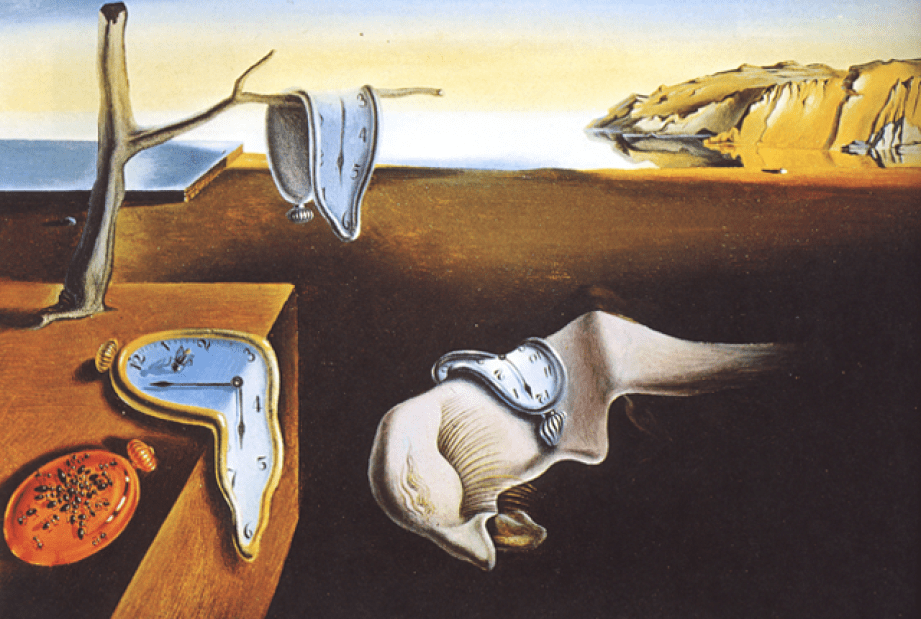
Salvador Dali’s “I am not very good at time recording.”
Last supper2
Da Vinci’s “Late night at the office before they abolished the working late dinner allowance.”
large_mona-lisa-image-1500
Da Vinci’s “Expression of a judge who doesn’t say anything during your entire oral submissions.”


American Gothic.png
Wood’s “The partners are pleased to announce this year’s salary increases.”
Medusa.png
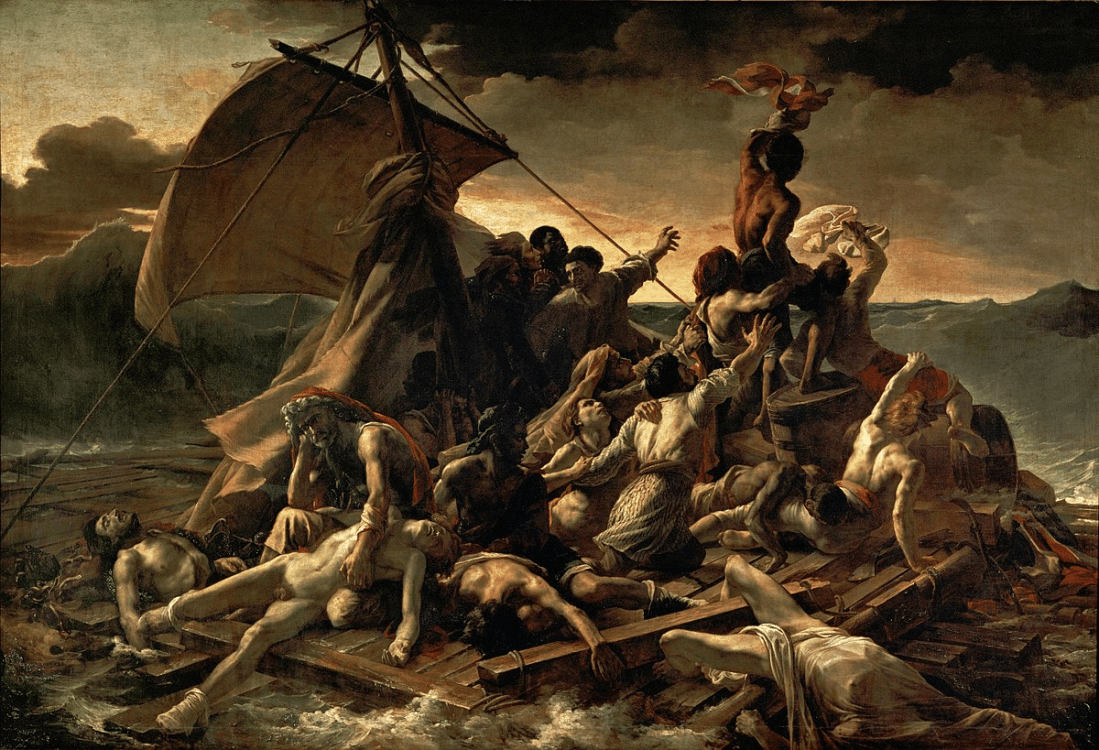
Gericault’s “Russell McVeagh post-Bazley Report.”
1200px-The_Lady_with_an_Ermine.png
Da Vinci’s “We certify for second counsel.”
Guernica-by-Picasso-painting.png
Picasso’s “Cross-examination done well.”


Thoughts on a new National Standards Committee

Fellow kids
A potential member of the new National Standards Committee

Good news everybody

The New Zealand Law Society is setting up a new National Standards Committee (it has one already but the legislation provides for two) (and see pedantic legalism at the end of this post).  You may remember the original and current National Standards Committee from when it broke the land speed record for backpedaling.

NZLS is advertising for lawyer members for the new NSC here.  The focus of the new NSC is “to deal specifically with complaints about harassment and bullying in the legal profession.”

This is a no-brainer from NZLS’ perspective:

  • First, and perhaps most importantly, it is another way in which NZLS can be seen to be Doing Something.  In terms of concrete steps it certainly rates more highly than “we made a poster“.
  • Second, and I mean this genuinely, this has the potential to be really good.  The current NSC deals with serious complaints (as befitting the national body).  This is an important symbolic step.  But more than that, it will collate these types of complaints into one body.  That body, through its membership and the experience it will gain, has the potential to be half decent at dealing with these complaints.  It could also lead to better, and more consistent practice in dealing with what will be vulnerable complainants.  There will be opportunities to adapt and improve the current administrative practice to make the complaints process more responsive to these types of complaints.
  • Third, as with all Committee processes, Committee decisions are independent.  NZLS gets the benefit of being seen to be doing something, while gaining the ability to say that any individual decision by the new NSC is not something it has (direct) control over.

If all of this sounds slightly cynical I don’t mean it to be.  I don’t know if this has been in the works for a while but there has been publicity about this since mid-February with the Newsroom story.  And as has been pointed out articulately by people like Steph Dyhrberg in this article, and someone a lot dumber in this nonsense, lawyers have known about this for a long time.  Perhaps NZLS have been considering this for a long time, I’m not sure, but if the Newsroom story pulled the rug out from under NZLS then this new NSC is the equivalent of at least getting around to placing a call to Carpet Court.

Get to the point

So far, so background.  The purpose of this short post is to argue why NZLS should consider seriously appointing a lawyer member that is as junior as the Lawyers and Conveyancers Act (Lawyers: Complaints Service and Standards Committees) Regulations 2008 (Regulations) will permit.  I think it is an important aspect of representation that will enhance the legitimacy of the new NSC.

Regulation 15(1) requires the lawyer members to have not less than five years experience as a lawyer.  Lawyers will be familiar with those types of experience clauses for appointment of judicial officers.  In theory, one could become a High Court judge after seven years of practice but that is exceedingly unlikely to happen.  The practical reality so far is that persons with a lot more experience than five years are appointed.  NZLS itself describes the lawyers appointed to Standards Committees as “senior practitioners“.

For the new NSC, NZLS should read the five year requirement literally.  Appoint a lawyer still in their twenties to the NSC.  There are a bunch of people that have practiced from age 23 or so.

I understand the traditional thinking on appointing senior persons to Standards Committees.  If we are going to ping each other for unsatisfactory conduct or refer each other to the Tribunal for misconduct then we want those decisions to be made by persons with perspective, experience, and who are respected in the profession.  But to my mind, a wider account of legitimacy-through-representation is required.  A body tasked with dealing with the problem should represent both complainants and respondents.  Furthermore, I am not saying the entire new NSC needs to be lawyers fresh from Profs.  Indeed, the current Regulations make that impossible.  All I am saying is that ensuring an appropriate age-mix will be an important consideration when deciding membership.

It is not tokenism to say that I would be more willing to complain knowing that the NSC wasn’t full of people who were practising when Sir Ronald Davison was Chief Justice.    Many complainants will find it difficult enough to complain about these matters as it is.  In addition, the new NSC itself will be assisted by membership that can identify more easily with persons who are, statistically, more likely to be affected by this conduct.  Finally, younger members of the profession will have greater confidence in the new NSC’s decisions if they know that its decisions were made, in part, by persons who have the same lived experiences in the profession as they do.

NZLS also wants the following qualities for members of the new NSC:

Experience in dealing with unacceptable conduct in the workplace, either directly or through the delivery of support or guidance, is required. Previous experience on a regulatory committee is also an advantage.

There will, I hope, be many young lawyers in positions of mentoring or support programmes within their firms.  Official experience should not be the only thing that counts here.  The Bazley Report highlighted the story of a young solicitor who went above and beyond to support the summer clerks at the centre of the incidents.  No HR training can beat that sort of practical experience gained from being placed in such an invidious situation.  As for experience on a regulatory committee, well, let the other members of the Committee bring that experience.

As the results of NZLS’ Harassment Survey made clear, negative workplace behaviour (what a euphemism!) is borne disproportionately by women, by minorities, and by young persons.  I am hopeful (confident, even) that the appointment of the NSC will reflect a demographic mix reflecting both the make up of the profession and those persons affected by the conduct the Committee is aimed at addressing.  The purpose of this post is not to elevate the concerns for young lawyers above those of anyone else affected by this type of conduct.  Rather, it is motivated by the risk that the traditional thinking about appointing “senior practitioners”, combined with the five year experience requirement (which usually means far more than five years) means that the Committee will lack representation for young lawyers.

All members of the profession are needed to address these issues.  Young people should not be overlooked because of traditional conceptions that Standards Committees should be senior practitioners.  Appoint someone in their goddamn twenties.

Pedantic legalism

Technically, the second National Standards Committee already exists.  It was brought into existence under reg 12(1)(t) of the Lawyers and Conveyancers Act (Lawyers: Complaints Service and Standards Committees) Regulations 2008 (Regulations). Currently it is not “operational” but can be made so under reg 12(2) of the Regulations.  The “operational/not operational” distinction permits states of dormancy meaning NZLS doesn’t have to run more Committees than it needs, while allowing capacity in case the number of complaints increases.  A complaint may only be referred to an operational Standards Committee: reg 13(2) of the Regulations.

The fox, the chicken and the grain – the Supreme Court decision in New Health

Foxchickengrain
A boatman searches for a ratio

Please read the following fact scenario and then answer the question.

Fact scenario

A law student has to get the members of the Supreme Court who decided New Health New Zealand Incorporated v South Taranaki District Council [2018] NZSC 59 from one side of a river to another.

The law student can take across up to two members of the Court at a time in her rowboat.

Chief Justice Elias can’t be left alone with any other member because there is no statutory authority to do so.

Justice Glazebrook might or might not be able to be left with any other member of the Court because just like her answer to the substantive question “it depends”.

Justices O’Regan and Ellen France must always stay together but doing so is a justified limit on their freedom.

Justice William Young will do what he’s told and take his medicine (but he wants to make clear that he doesn’t think this is medicine).

Minority justices can never be in a majority on either side of the river.


Question

May the river water be fluoridated?