It’s been a year of threats to the legal and constitutional order: a Minister calling a judge a Communist! A Minister calling a judge a Communist again when explaining what they meant the first time! A Ministerial apology where we all waited to see if they’d call a judge a Communist a third time!
The plot was lost somewhere around February when Smith v Fonterra set off tizzies so strong that, as of December, some victims have not yet re-hinged themselves. There is, as yet, no sign of the plot returning but we’re left with having to explain to ten per cent of the profession that they are not having an ordinary reaction to an orthodox civil procedure judgment.

It hasn’t all been fun, though. Sentencing policy is on its way back to the dark ages (the 2010s). There have been more Gary Judd opinion pieces than days to submit on half the Bills before select committees. And a Treaty Principles Bill shows that our commitment to a foundational constitutional document is alive and well as long as that document is the National-ACT coalition agreement. (Please indicate your disapproval of this joke in the traditional way – by voting for it at first reading.)
Personally, I blame the Supreme Court 20 Year Anniversary Conference for setting the tone for the year. It’s a strange birthday party where you invite people to say slightly mean things about you, but there you are. What started as a quasi-academic conference boiled over into about two media rounds of saying the Supreme Court was doing values, not law. It didn’t seem to occur to any of the interlocutors that if the judges really were substituting their own values for the rule of law then we’d have a legal system based on Werther’s Originals. But that didn’t stop every NZ Herald editorial sounding like it was ghostwritten by Muriel Newman. And when good old LawNews started insisting to its readers that freedom of speech meant it had to keep publishing the worst takes known to man, it became apparent to everyone that things were going to get worse before they got better.
Unfortunately, the institutionalists have played a shocker this year. There was no organised response to any of the March madness. The best we got was a statement a couple of weeks afterwards from the Law Society president that amounted to asking everybody to remember to use a coaster, while barstools were being hurled across the room. Plus some dude online, I guess.

The thing is, you don’t always get to choose when someone puts a coin in the Whack-a-Mole machine. But, when someone is silly enough to do that, you’re going to get moles whether you want ‘em or not. Your only choice at that point is whether you take up the squeaky rubber mallet. And if you don’t, there are an awful lot of moles.
So this year we got:
- A New Zealand Initiative Report wanting to re-enact s 4 of the Bill of Rights Act but in capital letters and start judicial purity tests.
- Veiled threats to the Waitangi Tribunal.
- Proposals to cap sentencing reductions for personal mitigating factors.
- A return of three strikes.
- The Treaty Principles Bill. (Everyone knows the Treaty Principles were invented by those activist, anti-establishment ne’er-do-wells with names like Sir Gordon Bisson and Edward Jonathan Somers QC. For 36 years the Court of Appeal’s Treaty principles have worked to the Crown’s advantage as a conservative stopgap against the inevitability of Te Reo text. Why Ministers of the Crown would want to blow up one of the best legal window-dressing tools the Crown has is lost on me.)
- The Regulatory Standards Bill.
- Fits of the vapours at updated Prosecution Guidelines. (And, can I just say, the best way to politicise the Guidelines is to withdraw them the first time some cranks don’t like them. I mean, come on, team! Moles everywhere!)
And while the fightback on the New Zealand Initiative report was pretty good, I’m sorry to report it’s still at least 5-1 to the baddies this year, and the one point was only thanks to overburdened stalwarts like Te Hunga Rōia Māori o Aotearoa fighting the good fight like they always do.
This is all immensely depressing for people like me who would prefer to be making fun of the Supreme Court for being weird and out of touch and not doing anything with public law. Instead, I find myself having to defend the same judges that took 876 days to issue judgment in Royal Forest and Bird. I pray that 2025 is a year that other people are out there boosting our courts and judges so that the 2025 Law Awards can be me saying mean things about the Supreme Court like normal.
Anyway, here are the awards.
Understatement of the year
Suppression order of the year
The Justices of the Peace that suppressed their own names when hearing Kerry Prendergast’s parking ticket case. You’ve heard of the The Secret Barrister but have you heard of the Secret JPs?
Far from being some threat to open justice, this is the justice system working as intended. Every legal system needs 20-30 judicial JPs, 8-10 District Court judges, and 1.5 High Court judges just making the most bananas calls you’ve ever seen.
Bad statistics of the year
Winner: NZ Lawyer Magazine
The NZLS Gender Equality Charter Survey found only 34% of equity partners were women.
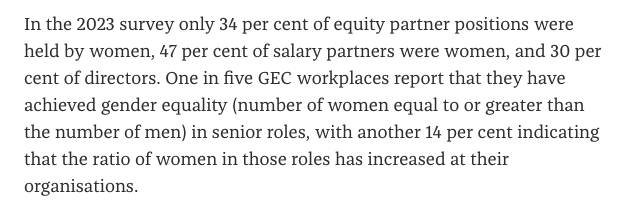
But NZ Lawyer inverted that and reported that 34% of women lawyers were equity partners.
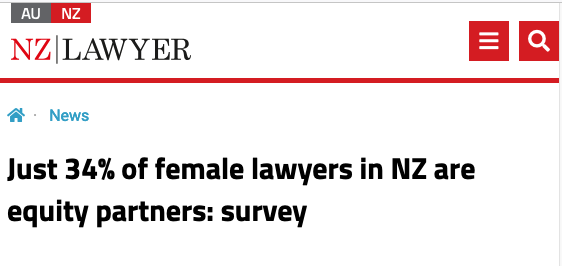
Progress *is* possible when we do bad stats. Congratulations to 34% of women lawyers!
Runner up: the appellant in Tamiefuna v R (SC51/2023).
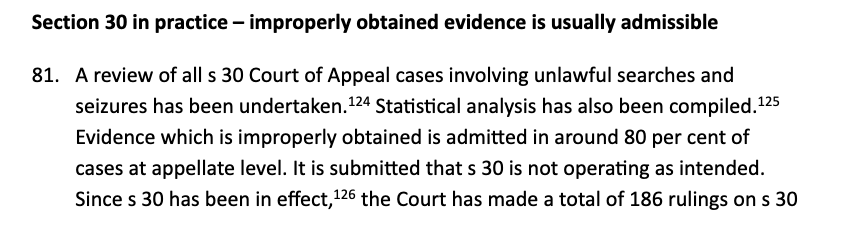
You can’t reason backwards from the amount of evidence admitted to say the section is too generous! That overlooks the evidence the Crown does not apply to admit because it assesses it will not meet the s 30 test. The only evidence the Court ever assesses is the evidence that the Crown thinks stands a fair chance of passing the test. The fact that 80% is then admitted just bears out the Crown’s assessment. It doesn’t mean the test is too permissive! Or, at least, it’s not a safe basis to conclude what the appellant asks the Court to conclude!
Unwelcome symbolism of the year
Hard To Find Books in Dunedin. Law: a half shelf. Anarchy: a full shelf.

Best case involving a dog
“A dog, like a person, is entitled to credit for a lifetime of good behaviour.”
So wrote Boldt J in Shramka v South Taranaki District Council [2024] NZHC 3064. Dexter the black labrador/ridgeback cross might have got a sense of which way the appeal against his destruction was going when his Honour managed to record he was a “beloved family dog”, “relatively elderly” and with “no record of his attacking anyone before” by paragraph 4 of the judgment. As a result of upcoming sentencing reforms, Dexter will soon be allowed greater reductions for personal mitigating factors than his owner.
Second best case involving a dog
The Human Rights Review Tribunal declining to award disbursements for the cost of kennel accommodation for a party’s dogs in Cunliffe v Helensville Primary School Board of Trustees [2024] NZHRRT 28.

So it’s yes to black lab/ridgeback crosses and no to boarder collies.
Sir Richard Wild Medal for Commitment to the Rule of Law
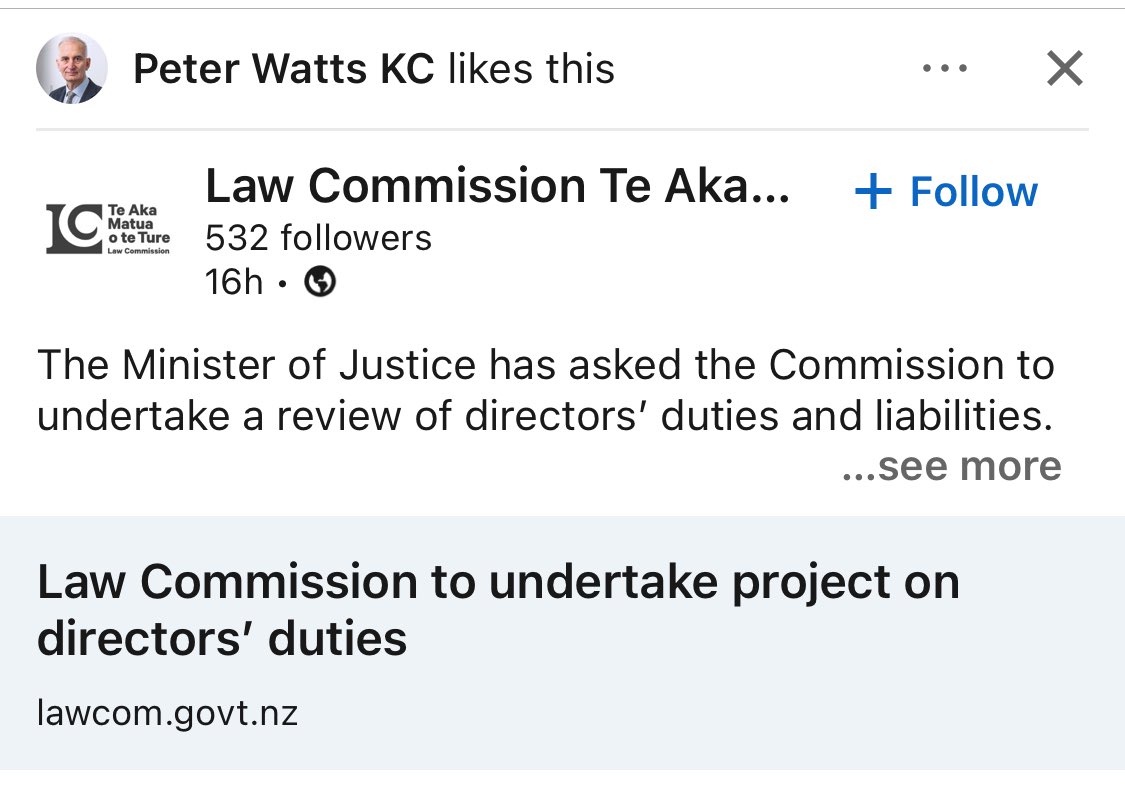
The rule of law requires that the law be knowable in advance. Concerned that young people might miss out on vital information about populist sentencing reform, Minister of Justice Paul Goldsmith reached out to the natural home of ram-raiding youths – LinkedIn – to give them an important update.

Headline of the year
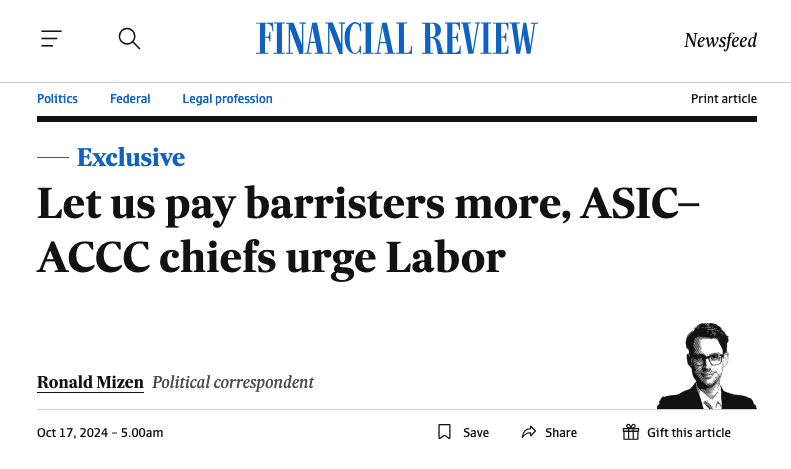
Flimsy defence of the year
When challenged about Shane Jones calling Gwyn J a communist judge:

I mean, okay. But if I call a judge childish, I can’t justify that by saying that it is a matter of public record that the judge was once a child.
Communist judge of the year
It has been explained to me that I’m not allowed to do this one.
Acronym of the year
An organisation for our times: Calm Alarming Law Madness!

Ground of appeal of the year
Now, I’m no one’s idea of an employment lawyer, but when the Court of Appeal grants leave in these terms that seems bad to me.

Social media power user of the year
You are the Attorney-General Judith Collins.
It is 21 March. At 4.00pm, you are called to the Inner Bar.

The ceremony finishes. There are some pleasantries. People shake your hand. Your dinner reservation is for 6.30pm. Just enough time to hop on Twitter and start arguing with people about whether and how New Zealand criminalises hate crime.

You are still wearing your ceremonial wig.
Most concerning footnote formatting of the year
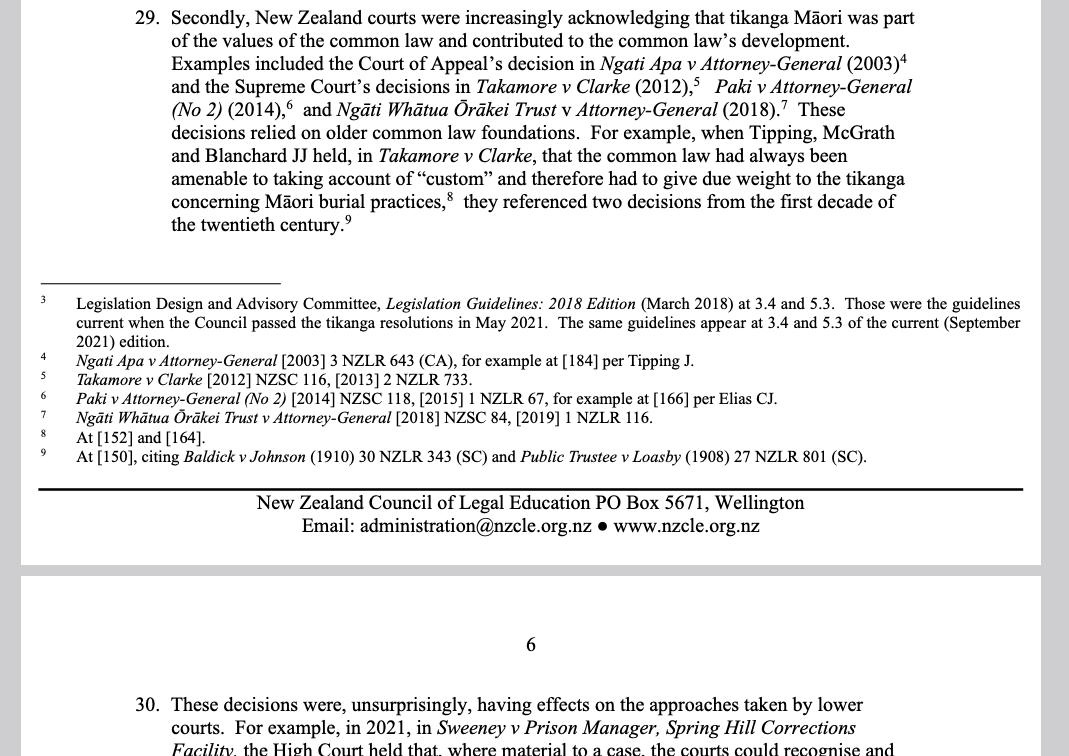
The New Zealand Council of Legal Education’s submission to the Regulations Review Committee about the inclusion of tikanga in the law school curriculum. A crisp, calm explanation of the Council’s role, that was fronted by a crisp, calm Campbell J. At times, one of the best pieces of legal writing I’ve read this year (it really kicks into gear from para 34 onwards).
But its footnotes. Check out the margins on this bad boy. Christ!
Best Metaphor for the Common Law

Ambitious argument of the year
The Crown in Choi v Attorney-General [2024] NZHC 3678 which ventured that an Act called the Victims’ Rights Act did not confer rights on a victim, a submission that Radich J called “a difficult one”.

Congratulations to all the winners.
I leave you with two things.
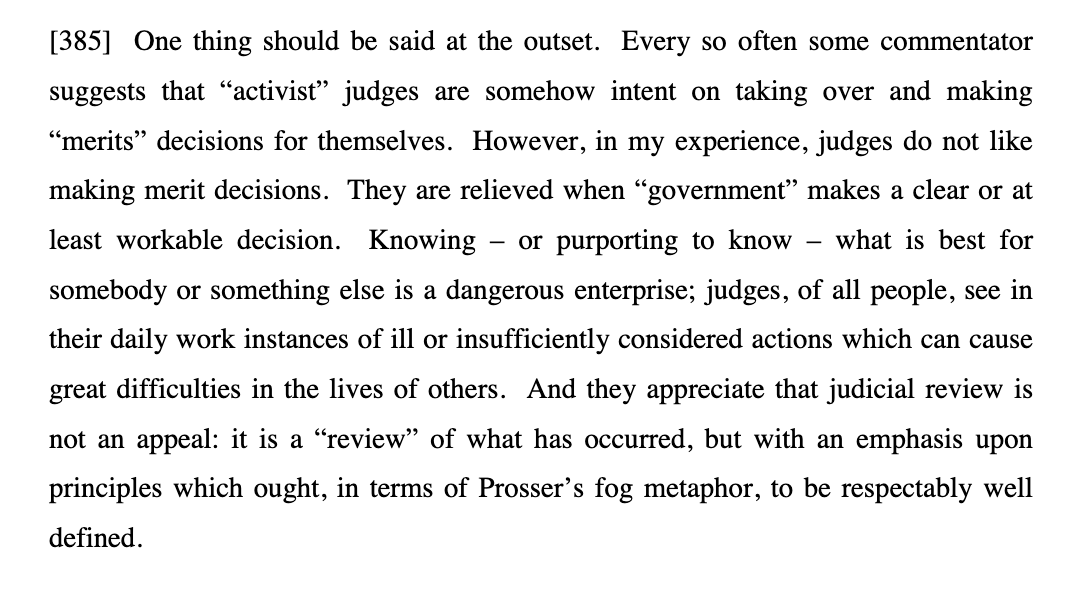
First, a quote from Sir Grant Hammond. It’s evergreen but you might think it particularly timely. Keep it in a drawer somewhere and when things seem particularly fraught in 2025, refer to it as necessary.
Second, I went to the bar this year. My background is in being a lawyer for institutional clients of various kinds which is mostly what my practice at the bar still is. But in the last two weeks one of my first private clients came to me with a problem that was really important to them and asked for my help. So I helped them by using the skills that other lawyers have taught me over the last ten years or so, and other lawyers played their part too, and there was a really good result, which I know there often isn’t. But I helped make it happen and… it felt really good?! (This is not a brag – the other private case I did this year, Venning J called my argument misconceived and the Crown Counsel literally ran out of words in the hearing to explain how I was wrong.)
I’m still turning the experience over in my head – the power that lawyers have to help people. I think it feels strange because too many years of public law acting for the Crown and regulators has left me thinking of power in the law as associated with actual legally-conferred power like a judge with the power to make decisions or a Minister conferred statutory powers of decision. And without wanting to have you all shout at me for not discovering the obvious until I’m 34 years old, the responsibility to use the power that lawyers have to help more clients is something that has me excited about 2025. But first a rest. Stay well.
 Strictly obiter
Disappointed to see that Red Hill’s Hot Pot did not make the list.
LikeLiked by 1 person